Alzheimer's Disease: Recognising Early Signs
Memory loss is only one piece of a larger picture.
Dr. Laurent Vidal
Neurologist
In simple terms
Early detection enables better planning and access to therapies that may slow decline.
What you need to remember
- Diagnostic process — Cognitive testing, brain imaging, and biomarkers (CSF amyloid-beta and tau, or PET imaging) confirm the disease and rule out reversible causes such as thyroid dysfunction or vitamin B12 deficiency.
- Current treatments — Cholinesterase inhibitors and memantine offer modest symptomatic benefit.
- Lifestyle factors — Aerobic exercise, the Mediterranean or MIND diet, social engagement, and management of hypertension and diabetes reduce risk and may delay symptoms.
Repeated questions, difficulty managing finances, getting lost in familiar places, and personality changes are more revealing than occasional forgetfulness.
Diagnostic process
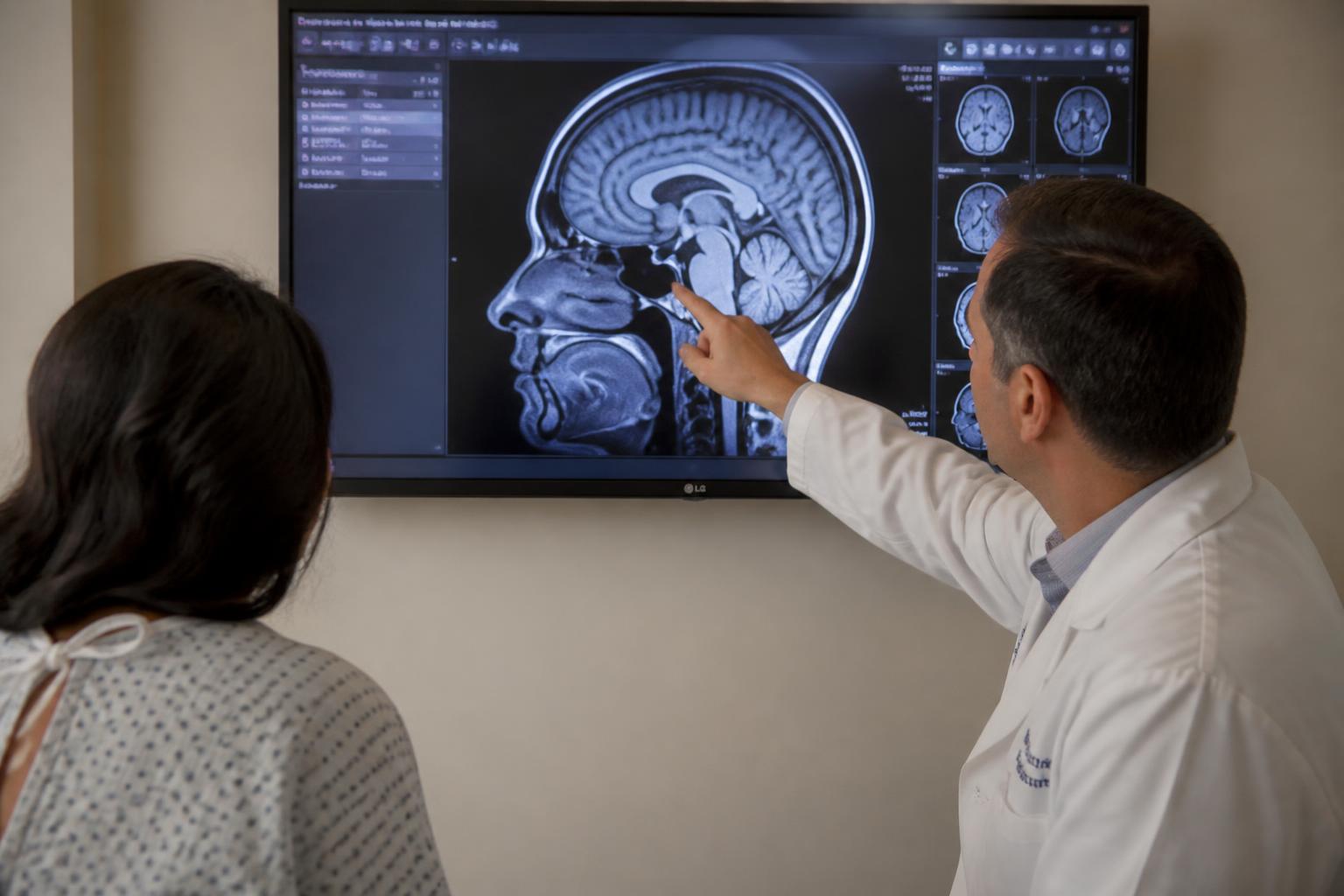
Cognitive testing, brain imaging, and biomarkers (CSF amyloid-beta and tau, or PET imaging) confirm the disease and rule out reversible causes such as thyroid dysfunction or vitamin B12 deficiency.
Current treatments
Cholinesterase inhibitors and memantine offer modest symptomatic benefit. Anti-amyloid antibodies (lecanemab, donanemab) modestly slow progression in early disease but carry risks of brain swelling.
Lifestyle factors
Aerobic exercise, the Mediterranean or MIND diet, social engagement, and management of hypertension and diabetes reduce risk and may delay symptoms.
Family caregivers need support too: respite services and support groups protect against burnout.
The words explained
Medical terms used above, in everyday language.
- Symptom
- A sign you can feel or see that something is wrong, like pain, tiredness or a rash.
- Diagnosis
- The moment a doctor identifies which illness is causing your symptoms.
- Blood pressure
- The force of blood pushing against your artery walls. Too high, over years, damages the heart and vessels.
- Antibody
- A protein your body makes to recognise and neutralise a specific germ.
- Cognitive
- Related to thinking: memory, attention, learning and decision-making.
When should you see a doctor?
- Your symptoms last more than a few weeks or keep coming back.
- They get worse quickly, or stop you doing everyday things.
- You notice sudden pain, breathing trouble, fainting or bleeding — seek urgent care.
- You already take medication and want to change anything about it.
This article explains general health information. It does not replace advice from your own doctor.
Frequently asked questions
- What is Alzheimer's Disease: Recognising Early Signs?
- Early detection enables better planning and access to therapies that may slow decline.
- What are the main symptoms or signs of Alzheimer's Disease: Recognising Early Signs?
- Common signs vary from person to person. The article above lists the symptoms to watch for, how they progress, and when they need medical attention.
- When should you see a doctor for Alzheimer's Disease: Recognising Early Signs?
- See a doctor if symptoms last more than a few weeks, get worse quickly, stop you doing everyday things, or if you notice sudden pain, breathing trouble, fainting or bleeding.
Related health topics
Neurology
Alzheimer's Disease: Recognizing Early Signs and Acting Soon
Recent memory loss, disorientation, language difficulties: the first signs of Alzheimer's are often confused with normal aging.
Neurology
Alzheimer's disease: stages, diagnosis and new treatments
Early signs, biomarkers, lecanemab/donanemab: what's new against Alzheimer's in 2026.

Neurology
Migraine: Understanding and Managing Attacks
Migraines affect about 12% of adults. Identifying triggers and using the right treatment shortens crises.
Neurology
Epilepsy: Living With the Disorder
About 1% of the population has epilepsy. Two thirds achieve seizure freedom with appropriate medication.

Neurology
Parkinson's Disease: Beyond the Tremor
Parkinson's is a multi-system disorder where dopamine loss affects far more than motor function.
Neurology
Stroke: Recognise It, Act Within the Hour
Stroke is the second cause of death worldwide. The FAST acronym helps anyone identify a stroke quickly.