
Haemophilia: when blood does not clot properly
A missing clotting factor, and how modern treatment changes daily life
Dr. Camille Roux
Internal medicine physician
In simple terms
What causes haemophilia A and B, why joints are the main target, and how prophylaxis prevents damage.
What it is, in plain words
Haemophilia is an inherited bleeding disorder in which one of the proteins needed to form a stable clot is missing or too low: factor VIII in haemophilia A, factor IX in haemophilia B. People with haemophilia do not bleed faster than others, they bleed for longer, because the clot that forms is fragile and breaks down.
Signs to look out for
- Large deep bruises from small knocks
- Swollen, hot, painful joints after minor effort, especially knees, ankles and elbows
- Prolonged bleeding after dental work, surgery or injury
- Blood in urine or stools
- In severe forms, bleeding that starts with no obvious injury
Why it happens
The gene sits on the X chromosome, so it mainly affects boys, while women who carry it may have mild symptoms and heavy periods. About a third of cases appear in families with no known history, from a new genetic change.
How doctors confirm it
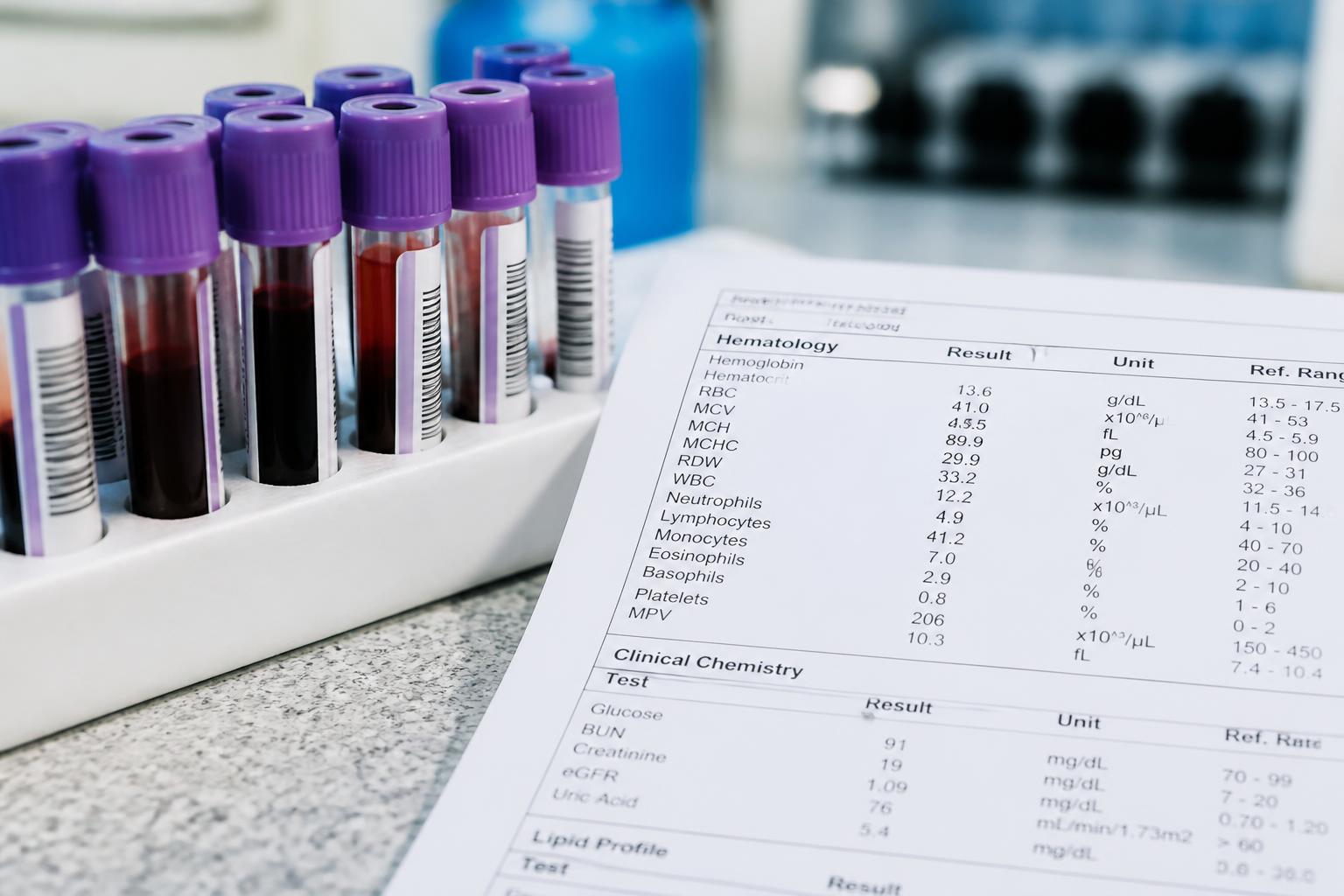
Blood tests show a prolonged activated partial thromboplastin time, and specific factor assays measure how much factor VIII or IX activity remains. Severity is graded as mild, moderate or severe according to that percentage. Genetic testing helps with family counselling.
Treatments and solutions
- Factor replacement given by injection, either to treat a bleed or, better, as regular prophylaxis to prevent bleeds before they happen
- Longer-acting factor products and non-factor treatments such as emicizumab, given under the skin every one to four weeks
- Desmopressin for some mild haemophilia A cases, which releases the body's own stored factor
- Tranexamic acid for mouth, nose and menstrual bleeding
- Physiotherapy to protect and strengthen joints, and gene therapy now available for selected adults
Living with it day to day
Everyday care matters: treat a joint bleed within the first hour, keep muscles strong with swimming and cycling, avoid aspirin and anti-inflammatory painkillers, carry a medical card, and be followed by a specialised haemophilia centre.
When to seek medical help
Go to hospital immediately for a head injury of any kind, for severe headache, vomiting or confusion, for neck or throat swelling, or for a bleed that does not settle after treatment.
This article explains general health information in simple language. It does not replace advice from your own doctor.
The words explained
Medical terms used above, in everyday language.
- Inflammation
- The body's reaction to injury or irritation: redness, swelling, heat or pain.
- Symptom
- A sign you can feel or see that something is wrong, like pain, tiredness or a rash.
- Prevention
- Steps taken before a problem starts, to make it less likely.
- Genetic
- Passed down in your family through your genes.
- Anti-inflammatory
- A medicine or food that calms swelling and pain.
When should you see a doctor?
- Your symptoms last more than a few weeks or keep coming back.
- They get worse quickly, or stop you doing everyday things.
- You notice sudden pain, breathing trouble, fainting or bleeding — seek urgent care.
- You already take medication and want to change anything about it.
This article explains general health information. It does not replace advice from your own doctor.
Frequently asked questions
- What is Haemophilia: when blood does not clot properly?
- What causes haemophilia A and B, why joints are the main target, and how prophylaxis prevents damage.
- What are the main symptoms or signs of Haemophilia: when blood does not clot properly?
- Common signs vary from person to person. The article above lists the symptoms to watch for, how they progress, and when they need medical attention.
- When should you see a doctor for Haemophilia: when blood does not clot properly?
- See a doctor if symptoms last more than a few weeks, get worse quickly, stop you doing everyday things, or if you notice sudden pain, breathing trouble, fainting or bleeding.
Related health topics
Blood & Hematology
Thalassaemia: an inherited anaemia explained simply
Why thalassaemia causes lifelong anaemia, how minor and major forms differ, and what treatment involves.

Digestive Health
Haemorrhoids: bleeding and discomfort that people hide
What actually causes piles, which grade you have, and the treatments that work.
Blood & Hematology
Haemochromatosis: too much iron in the body
Why iron accumulates, the organs it damages, and how venesection prevents all of it.
Conditions
Wilson disease: copper that the liver cannot remove
Liver and neurological signs, the diagnostic clues, and lifelong treatment.
Blood & Hematology
G6PD deficiency: when certain foods and drugs destroy red cells
Which triggers to avoid, how a haemolytic crisis presents, and why the condition is otherwise silent.