
Vitiligo: understanding skin depigmentation
A visible autoimmune disease
Dr. Sophie Renard
Dermatologist
In simple terms
Phototherapy, topical JAK inhibitors: novelties against vitiligo.
A loss of melanocytes
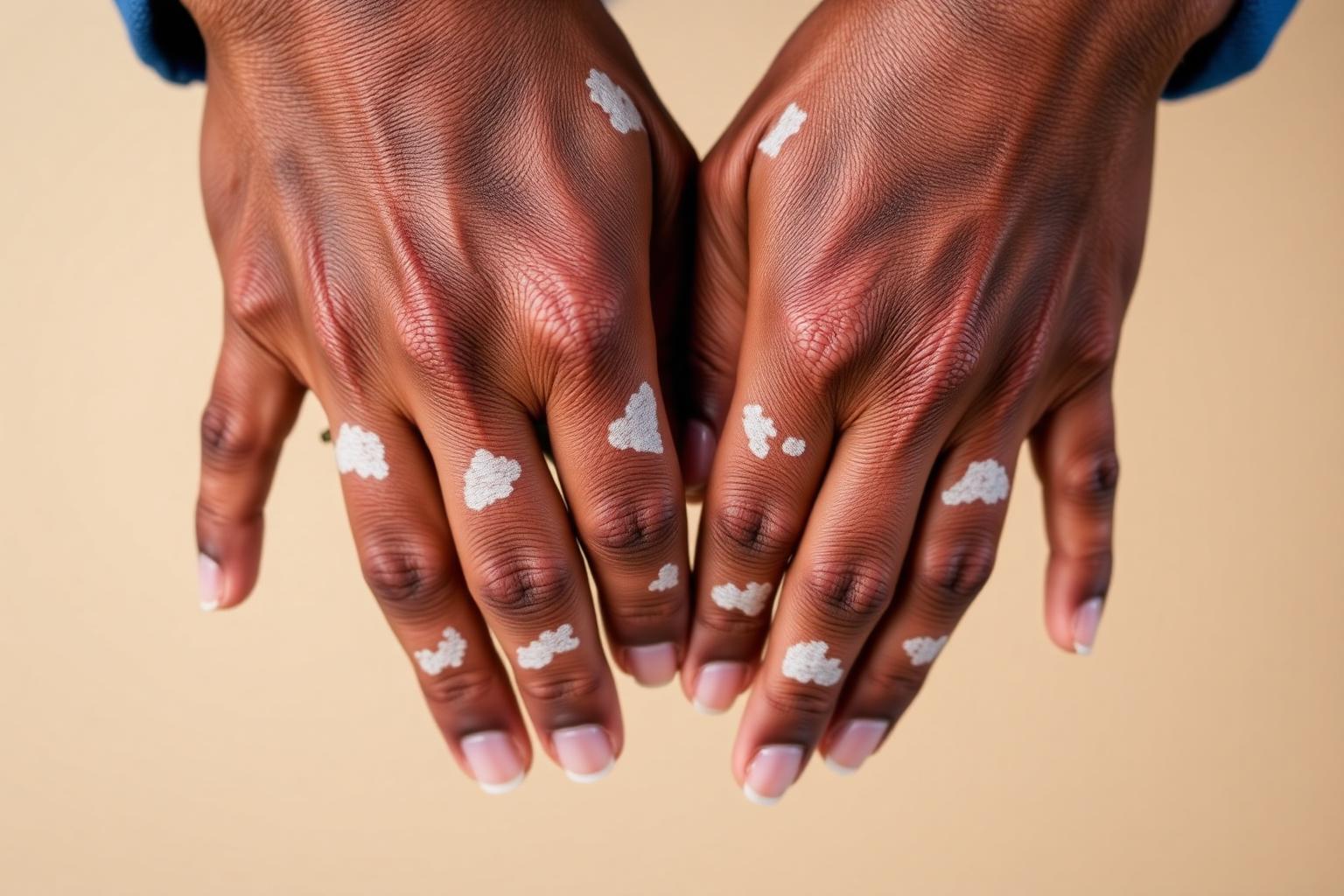
Vitiligo affects 1-2% of the population. The immune system destroys melanocytes, creating symmetrical white patches (hands, face, around orifices). Often associated with other autoimmune diseases (thyroiditis).
Treatments
- Topical corticosteroids and calcineurin inhibitors (tacrolimus): localized forms
- Narrowband UVB phototherapy: reference for extensive forms
- Topical ruxolitinib (JAK inhibitor): approved in 2022, spectacular facial repigmentation
- Melanocyte grafts for stable forms
Living with it
Imperative sun protection, psychological support (often severe aesthetic impact), patient associations.
The words explained
Medical terms used above, in everyday language.
- Immune system
- Your body's defence team: cells that fight germs and repair damage.
- Topical
- A treatment you apply on the skin, like a cream, gel or ointment.
When should you see a doctor?
- Your symptoms last more than a few weeks or keep coming back.
- They get worse quickly, or stop you doing everyday things.
- You notice sudden pain, breathing trouble, fainting or bleeding — seek urgent care.
- You already take medication and want to change anything about it.
This article explains general health information. It does not replace advice from your own doctor.
Frequently asked questions
- What is Vitiligo: understanding skin depigmentation?
- Phototherapy, topical JAK inhibitors: novelties against vitiligo.
- What are the main symptoms or signs of Vitiligo: understanding skin depigmentation?
- Common signs vary from person to person. The article above lists the symptoms to watch for, how they progress, and when they need medical attention.
- When should you see a doctor for Vitiligo: understanding skin depigmentation?
- See a doctor if symptoms last more than a few weeks, get worse quickly, stop you doing everyday things, or if you notice sudden pain, breathing trouble, fainting or bleeding.
Related health topics

Conditions
Scleroderma: when the skin and organs harden
Localised versus systemic forms, the early signs, and the treatments that changed the outlook.
Dermatology
Psoriasis: Solutions That Change Patients' Lives
Creams, phototherapy, biologics: psoriasis now has very effective treatments.
Conditions
Systemic lupus erythematosus: understanding this autoimmune disease
Fatigue, joint pain, butterfly rash: recognizing lupus and adapting its management.
Bones, Joints & Muscles
Rheumatoid arthritis: slowing articular inflammation
Methotrexate, biotherapies, JAK inhibitors: the therapeutic revolution of RA.

Neurology
Myasthenia gravis: muscle fatigability
Pyridostigmine, immunosuppressants, complement inhibitors: modern treatment of myasthenia.
Conditions
Sjogren syndrome: dry eyes and dry mouth that are not trivial
Why dryness deserves investigation, the complications to prevent, and daily management.