Hypoglycaemia: low blood sugar and how to correct it fast
Fifteen grams, fifteen minutes
Dr. Laura Mercier
Endocrinologist
In simple terms
Recognising the two phases of symptoms, the rule of 15, and what to do when someone cannot swallow.
What it is, in plain words
Hypoglycaemia means blood glucose below about 3.9 mmol/L, or 70 mg/dL. The body reacts first with adrenaline, producing shaking and sweating, then, if sugar keeps falling, the brain itself runs short of fuel and thinking and consciousness are affected. Both phases are important to recognise.
Signs to look out for
- Early: shaking, sweating, palpitations, hunger, anxiety, tingling lips
- Later: difficulty concentrating, slurred speech, blurred vision, odd behaviour or aggression
- Severe: confusion, seizures, loss of consciousness
- Night-time: nightmares, sweating, morning headache and unusual tiredness
- Loss of the early warning signs after years of diabetes, called hypoglycaemia unawareness
Why it happens
Most cases occur in people treated with insulin or sulfonylureas, after too much medicine, a missed meal, unusual exercise or alcohol. Rare causes without diabetes include insulin-producing tumours, adrenal insufficiency and severe liver disease.
How doctors confirm it
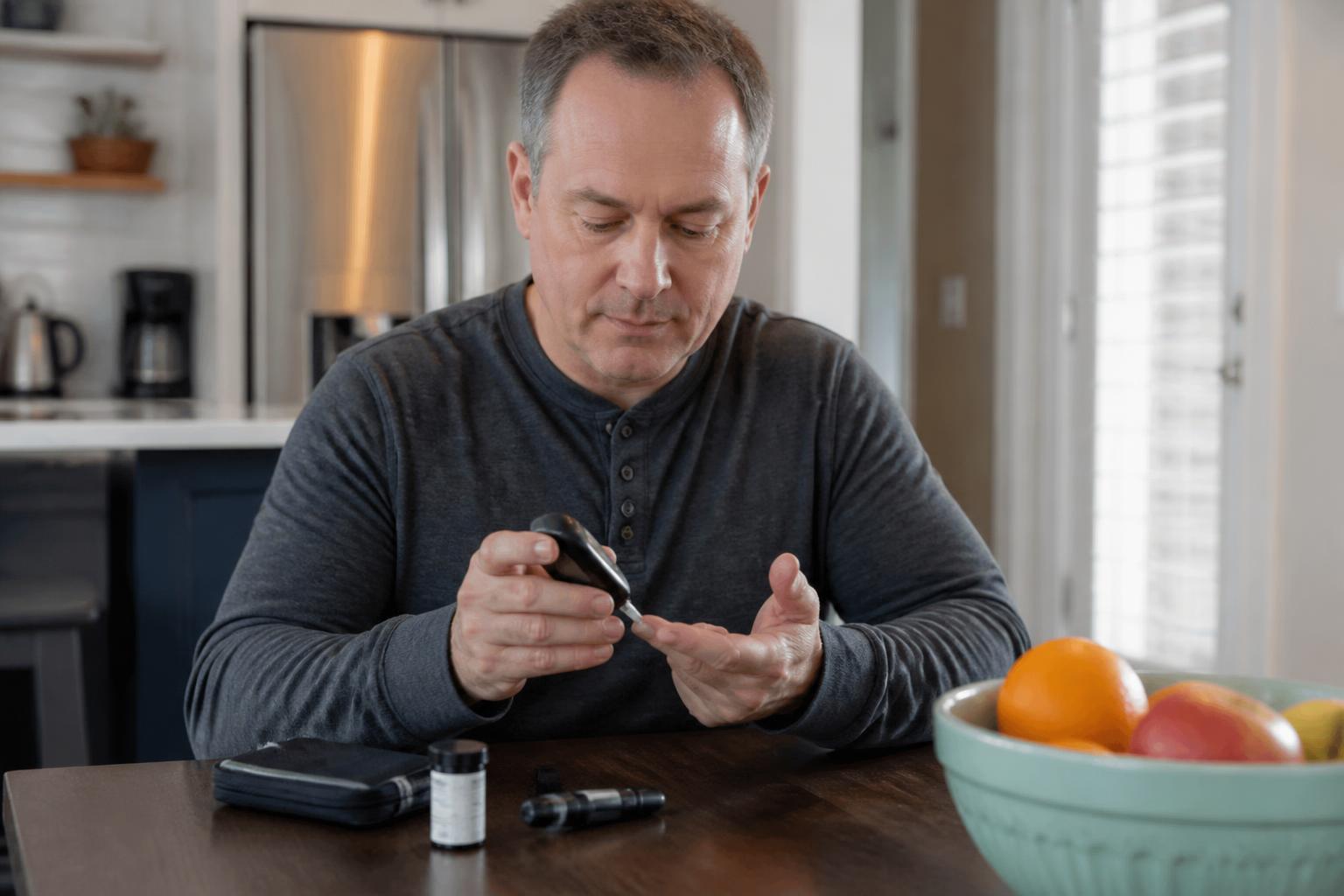
Confirmation is by fingerstick or continuous glucose monitoring. In people without diabetes, investigation includes measuring insulin, C-peptide and cortisol during a documented low episode.
Treatments and solutions
- The rule of 15: take 15 g of fast sugar such as three glucose tablets, 150 ml of fruit juice or a sugary drink, wait 15 minutes, retest, and repeat if still low
- Follow with a longer-acting carbohydrate such as bread or a biscuit if the next meal is more than an hour away
- Never give anything by mouth to someone who is unconscious or fitting: use glucagon by injection or nasal spray and call emergency services
- Reviewing insulin doses, timing, exercise and alcohol habits with the diabetes team after any severe episode
- Continuous glucose monitoring with alarms, which is particularly valuable in hypoglycaemia unawareness
Living with it day to day
Carry fast sugar at all times, tell colleagues and family what to do, and be careful with driving: check glucose before setting off and do not drive below 5 mmol/L.
When to seek medical help
Seek emergency help for loss of consciousness, seizures, or repeated lows that you cannot explain or correct.
This article explains general health information in simple language. It does not replace advice from your own doctor.
The words explained
Medical terms used above, in everyday language.
- Insulin
- The hormone that lets sugar move from your blood into your cells for energy.
- Blood sugar
- The amount of sugar circulating in your blood, your body's main fuel.
- Anxiety
- Ongoing worry or fear that is strong enough to affect daily life.
When should you see a doctor?
- Your symptoms last more than a few weeks or keep coming back.
- They get worse quickly, or stop you doing everyday things.
- You notice sudden pain, breathing trouble, fainting or bleeding — seek urgent care.
- You already take medication and want to change anything about it.
This article explains general health information. It does not replace advice from your own doctor.
Frequently asked questions
- What is Hypoglycaemia: low blood sugar and how to correct it fast?
- Recognising the two phases of symptoms, the rule of 15, and what to do when someone cannot swallow.
- What are the main symptoms or signs of Hypoglycaemia: low blood sugar and how to correct it fast?
- Common signs vary from person to person. The article above lists the symptoms to watch for, how they progress, and when they need medical attention.
- When should you see a doctor for Hypoglycaemia: low blood sugar and how to correct it fast?
- See a doctor if symptoms last more than a few weeks, get worse quickly, stop you doing everyday things, or if you notice sudden pain, breathing trouble, fainting or bleeding.
Related health topics
Diabetes & Endocrinology
Type 2 Diabetes: Preventing and Managing the Disease of the Century
Type 2 diabetes is often linked to lifestyle. Simple changes can prevent its onset or significantly improve its control.
Diabetes & Endocrinology
Preventing type 2 diabetes: the daily levers
Weight, movement, sleep and fibre together cut risk by more than half in people at risk.
Neurology
Stroke: Every Minute Counts to Save the Brain
Falling face, weak arm, difficulty speaking: recognizing the signs of a stroke and calling 911 immediately can save lives and limit sequelae.
Diabetes & Endocrinology
Type 1 Diabetes: Living with Insulin Daily
Type 1 diabetes requires lifelong insulin injections. Insulin pumps and continuous glucose monitors are transforming patients' lives.

Pulmonology
Pulmonary embolism: when a clot reaches the lungs
Recognising the symptoms, understanding the tests, and knowing what treatment and follow-up involve.

Digestive Health
Acute pancreatitis: sudden severe abdominal pain
The two main causes, why the pain goes through to the back, and what hospital treatment involves.