
Knee osteoarthritis: staying active without making it worse
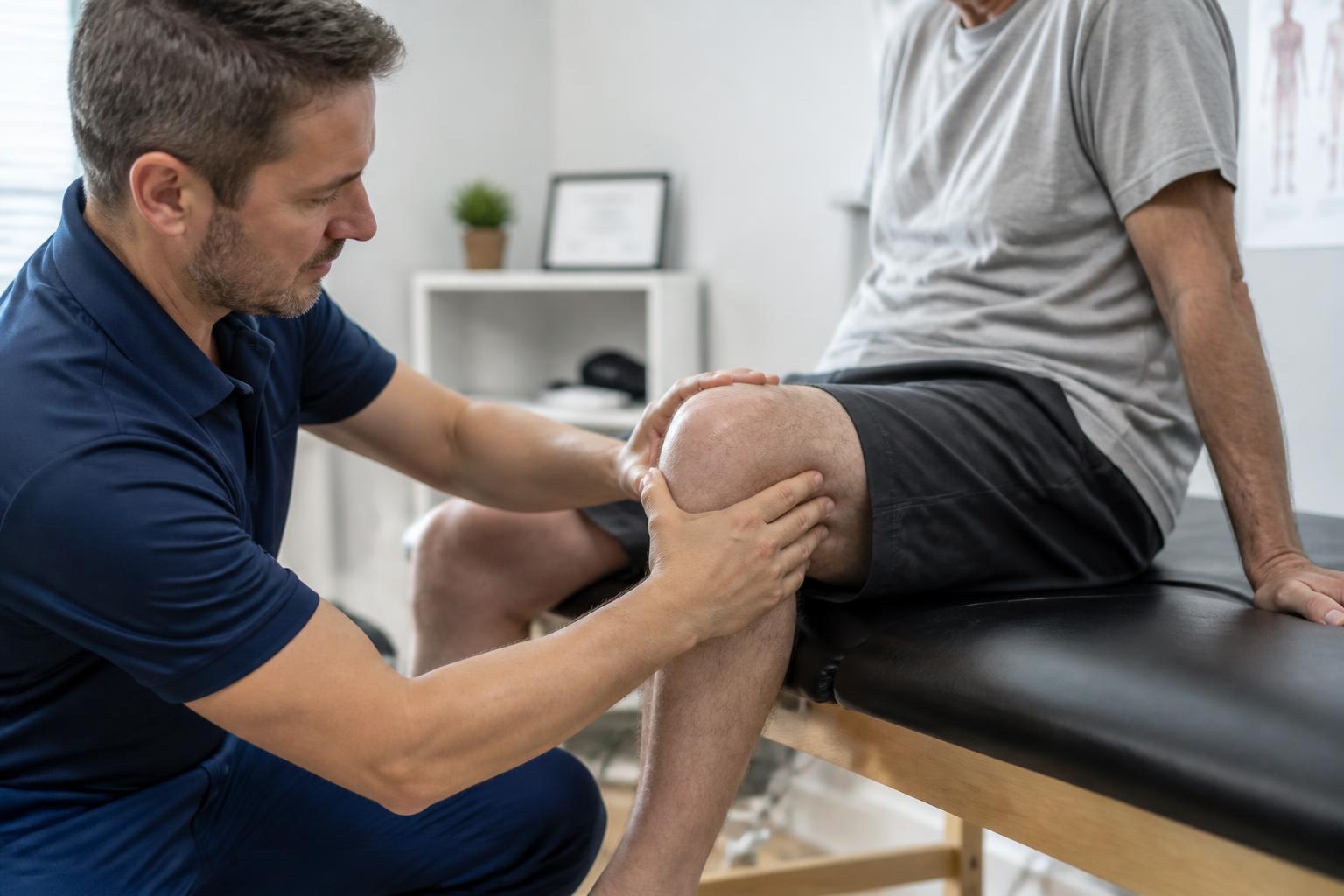
Strength work is the first-line treatment
Dr. Marc Lefèvre
Rheumatologist
In simple terms
Cartilage does not wear out from use; weak muscles and inactivity make pain worse.
What is happening in the joint
Cartilage thins, the underlying bone changes, and the joint lining becomes intermittently inflamed. Pain is typically worse with activity and after rest, with morning stiffness that eases within half an hour.
The first-line treatment is exercise
Strengthening the quadriceps and hip muscles reduces knee pain about as much as anti-inflammatory tablets, without the side effects. Cycling, swimming, and controlled leg strengthening two to three times a week are the mainstay. Pain that settles within 24 hours after exercise is acceptable and does not mean damage.
Weight and load
Each kilo lost removes several kilos of force from the knee with every step. Even 5% weight loss produces measurable pain relief.
Other options
- Topical anti-inflammatory gel: effective and gentler on the stomach
- Short courses of oral anti-inflammatories
- Corticosteroid injection for a severe flare, used sparingly
- Walking aid or knee brace for stability
- Joint replacement when pain and function are seriously limited despite the above
What has little evidence
Glucosamine and chondroitin supplements perform close to placebo in good-quality trials. Spend the money on physiotherapy instead.
The words explained
Medical terms used above, in everyday language.
- Inflammation
- The body's reaction to injury or irritation: redness, swelling, heat or pain.
- Topical
- A treatment you apply on the skin, like a cream, gel or ointment.
- Anti-inflammatory
- A medicine or food that calms swelling and pain.
When should you see a doctor?
- Your symptoms last more than a few weeks or keep coming back.
- They get worse quickly, or stop you doing everyday things.
- You notice sudden pain, breathing trouble, fainting or bleeding — seek urgent care.
- You already take medication and want to change anything about it.
This article explains general health information. It does not replace advice from your own doctor.
Frequently asked questions
- What is Knee osteoarthritis: staying active without making it worse?
- Cartilage does not wear out from use; weak muscles and inactivity make pain worse.
- What are the main symptoms or signs of Knee osteoarthritis: staying active without making it worse?
- Common signs vary from person to person. The article above lists the symptoms to watch for, how they progress, and when they need medical attention.
- When should you see a doctor for Knee osteoarthritis: staying active without making it worse?
- See a doctor if symptoms last more than a few weeks, get worse quickly, stop you doing everyday things, or if you notice sudden pain, breathing trouble, fainting or bleeding.
Related health topics
Bones, Joints & Muscles
Knee Osteoarthritis: Slowing Wear and Relieving Pain
From paracetamol to injections to prosthesis: an overview of solutions depending on the stage.
Bones, Joints & Muscles
Osteoarthritis: Understanding and Relieving Joint Wear
Knee, hip, hand pain: osteoarthritis affects hundreds of millions of people. Adapted physical exercise is the best non-pharmacological treatment.
Bones, Joints & Muscles
Osteoporosis: Detecting Silent Bone Loss
Osteoporosis quietly thins bones over decades. The first fracture is often the first symptom.
Bones, Joints & Muscles
Fibromyalgia: A Real Disease of Pain Processing
Fibromyalgia is recognised as a central pain syndrome, not 'in the head'. Comprehensive care brings real relief.
Bones, Joints & Muscles
Gout: Acute Crises and Long-Term Control
Gout is the most common inflammatory arthritis in men. Effective uric-acid-lowering therapy prevents recurrent attacks.
Bones, Joints & Muscles
Osteoarthritis: Understanding and Relieving Joint Wear
Knee, hip, hand pain: osteoarthritis affects hundreds of millions of people. Adapted physical exercise is the best non-pharmacological treatment.